2026 Price Shift: Xbox Series X vs PS5 — Stock and Service
The PS5 is the better default pick for most buyers in 2026, largely on the strength of its exclusive library and the DualSense controller. Xbox Series X still wins for players who value Game Pass economics, multi-device flexibility, or already own a large Xbox library. Recent 2026 price shifts and each platform’s publishing strategy have changed the math more than any hardware upgrade has.
TL;DR:
- The PS5’s faster SSD makes a noticeable difference in game loading times and streaming open-world textures more smoothly than the Xbox Series X.
- Cross-platform game performance shows only a 1 to 3 FPS difference in most titles, with Xbox Series X having a slight edge mainly in native 4K and ray tracing.
- PlayStation’s exclusive game lineup, immersive DualSense controller, and PSVR2 support remain the strongest reasons for story-driven and VR-focused players to choose PS5.
- The Xbox Series X’s deeper backward compatibility, four-generation game support, and Xbox Game Pass value benefit players with existing libraries or subscription preferences.
- Current 2026 prices favor PS5 for budget-conscious buyers, especially with the Xbox price hike, and storage upgrades are essential on both platforms, but easier and cheaper to implement on PS5.
Table of Contents
- Xbox Series X vs PS5: Specs That Actually Matter
- How Much Faster Is the PS5 or Xbox Series X in Real Games?
- Which Console Has Better Exclusive Games?
- PS5 vs Xbox Series X: Which Costs Less Over Time?
- Controllers, VR, and Media Playback Differences
- Storage Upgrades and Backward Compatibility Compared
- Which Console Should You Actually Buy?
- What Buyers Get Wrong About This Comparison
- Buy With Confidence at Digiwrld
- Sources
- FAQ
Xbox Series X vs PS5: Specs That Actually Matter
The raw numbers favor Xbox Series X on paper. Its GPU runs at roughly 12 teraflops across 52 compute units, compared to about 10.28 teraflops and 36 compute units in the standard PS5. This represents the rated theoretical graphics difference according to published specs, although real-world impact is modest.
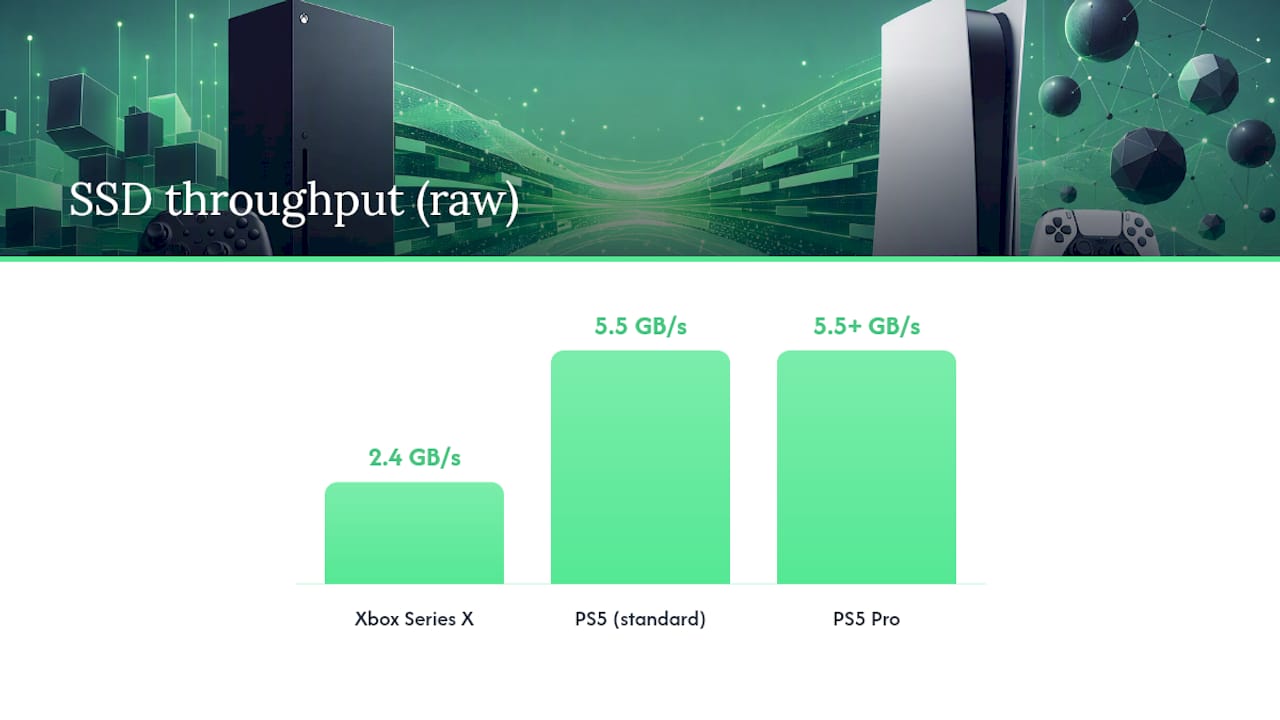
Storage tells a different story. The PS5’s SSD delivers 5.5 GB/s of raw throughput, more than double the 2.4 GB/s Xbox Series X manages. That throughput advantage matters more day-to-day than most buyers expect, because it directly affects how fast textures stream in and how quickly a game world loads after a fast-travel command or a death respawn.
Here’s how the core specs stack up:
| Spec | Xbox Series X | PS5 (standard) | PS5 Pro |
|---|---|---|---|
| GPU compute | ~12 TFLOPS, 52 CUs | ~10.28 TFLOPS, 36 CUs | Higher CU count, enhanced ray tracing |
| CPU | Zen 2 architecture, clock speed varies | Zen 2 architecture, clock speed varies | Same Zen 2 base, higher sustained clocks |
| Memory | GDDR6 memory | GDDR6 memory | GDDR6 memory with improved bandwidth |
| SSD throughput | 2.4 GB/s (raw) | 5.5 GB/s (raw) | 5.5 GB/s+ |
| Internal storage | 1TB | 825GB (about 667GB usable) | 2TB |
A few things worth calling out from that table:
- Xbox Series X’s compute unit count gives it an edge in scenes with heavy geometry and particle effects, the kind of workload that taxes a GPU more than a CPU.
- PS5’s SSD architecture, built around a custom controller rather than off-the-shelf NVMe drives, is why Sony’s exclusives can stream massive open worlds with almost no loading screens.
- The PS5 Pro sits above both as the enthusiast option, adding a stronger GPU and 2TB of storage but launching at a materially higher price point than either standard console.
- Usable storage on a base PS5 is lower than the sticker number suggests, since the OS reserves a chunk of that 825GB.
For anyone chasing frame rate ceilings in competitive shooters, the Xbox Series X’s compute advantage is real. For anyone who cares about how fast a game gets them back into the action after a load screen, the PS5’s SSD is the spec that actually shows up in daily play. Buyers weighing a Xbox Series X purchase against a PS5 purchase should treat these two specs as the real decision points, not the teraflops number alone.
How Much Faster Is the PS5 or Xbox Series X in Real Games?
Spec sheets promise more than games usually deliver. In cross-platform benchmark testing, the actual frame rate gap between PS5 and Xbox Series X typically runs just 1 to 3 FPS in most multiplatform titles, not the double-digit swings the paper specs might suggest.
Statistic Callout: Across aggregate cross-platform benchmarks, PS5 and Xbox Series X differ by only 1 to 3 FPS in the majority of shared titles, according to testing summarized by Tom’s Guide. Developers building for both consoles tune performance targets for parity rather than chasing whichever platform has more headroom.
That parity isn’t an accident. Studios building for both platforms typically target a shared frame rate and resolution goal, then adjust settings until each console hits it. A fixed teraflops advantage on Xbox Series X often gets absorbed into slightly higher texture resolution or a marginally more stable frame pace, rather than translating into a visibly smoother game.
Where the differences do show up:
- Native 4K and ray-traced scenes. Xbox Series X’s extra compute units give it a small edge in titles pushing full 4K resolution with ray tracing enabled, sometimes holding a higher internal resolution where PS5 drops to a dynamic scale.
- Load times in open-world titles. PS5’s SSD throughput advantage becomes obvious in games built specifically around instant loading, like fast-travel-heavy open worlds where Sony’s first-party studios design around the hardware.
- Fast-paced competitive titles. Here the 1 to 3 FPS gap essentially disappears from a player’s perspective; input latency and network conditions matter more than either console’s rated GPU output.
- Thermal throttling. Both consoles are engineered to sustain their target clocks under load, so extended play sessions rarely produce a meaningful drop in either camp, though Xbox Series X’s tower design tends to run marginally quieter under sustained load than PS5’s wider chassis.
The honest takeaway: unless you’re doing frame-by-frame comparisons on a capture card, you will not notice the hardware gap during normal play. What you will notice is how fast a game loads and whether ray tracing looks cleaner in a handful of showcase titles.
Which Console Has Better Exclusive Games?
PlayStation still holds the stronger hand in single-player, story-driven exclusives, and that gap hasn’t meaningfully closed. Sony’s first-party studios continue producing narrative-heavy, cinematic titles that stay PS5-only for extended windows, and that library remains the single biggest reason serious single-player fans lean PlayStation.
Microsoft has taken a different path entirely. Rather than building a wall of console exclusives, it puts first-party titles into Xbox Game Pass on day one and increasingly ships those same games on rival hardware and PC. That strategy has reduced the traditional pull of “exclusivity” as a reason to buy Xbox hardware specifically, since some of Microsoft’s biggest releases now reach players regardless of which console they own.
Three things shape how much this matters to you:
- Story-driven players should weigh PlayStation’s exclusive lineup heavily. If cinematic, single-player games are most of your library, PS5 access to Sony’s first-party catalog is difficult to replace elsewhere.
- Multi-device households benefit from Microsoft’s cross-platform push. A family with an Xbox console, a gaming PC, and a Game Pass subscription can play the same day-one releases across every device without buying a game twice.
- Install base shapes matchmaking and community size. PlayStation’s larger install base means faster matchmaking in some multiplayer titles and a bigger pool of friends already on the platform, though this varies title by title.
The practical upshot: exclusivity used to be the whole argument. Now it’s one piece of a bigger picture that includes how you actually consume games, subscription or ownership, and whether your friend group already picked a side.
PS5 vs Xbox Series X: Which Costs Less Over Time?
The 2026 pricing picture looks different than it did at launch. Xbox Series X saw a price increase that took effect August 1, 2026, while PS5 has generally held a lower flagship price point through the same period. That shift has real weight in a head-to-head recommendation since the “which is cheaper” answer used to be closer to a wash.
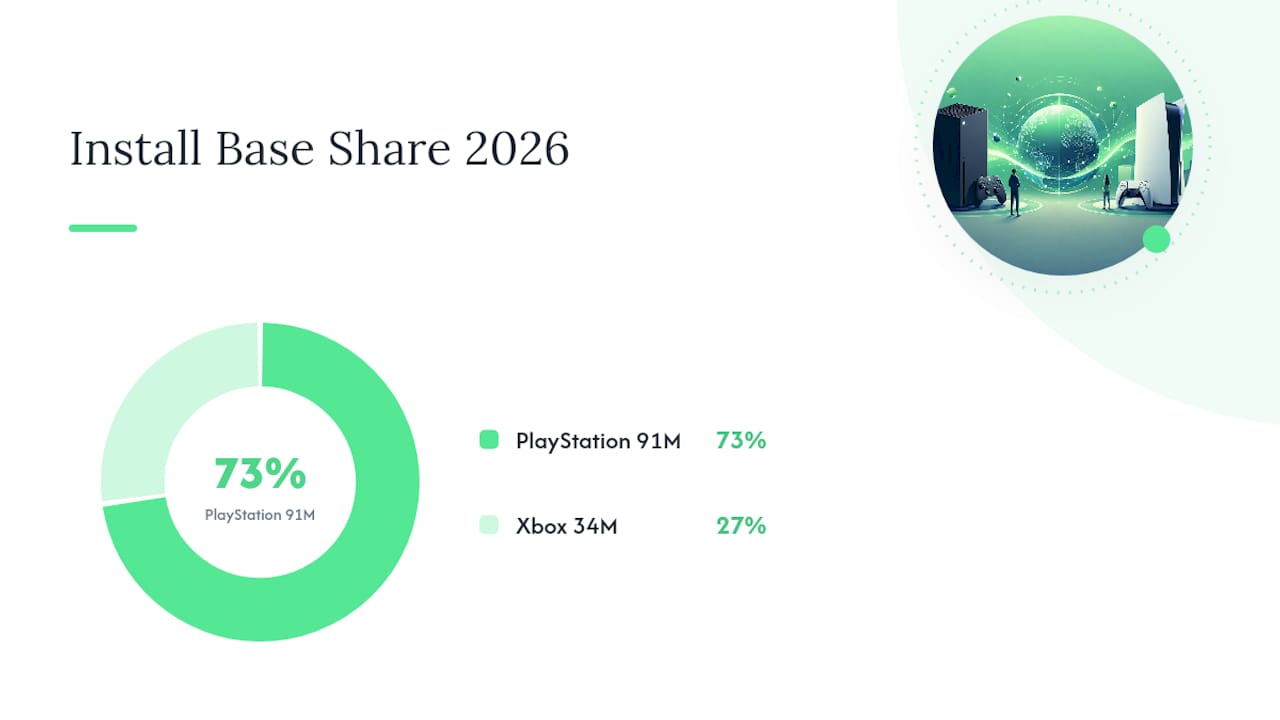
Statistic Callout: Install base data cited in 2026 pricing coverage puts PlayStation’s userbase at roughly 91 million against Xbox’s 34 million, a gap that has only widened as pricing diverged.
Subscription economics complicate the picture further. Game Pass remains the strongest subscription value on either platform, bundling day-one first-party releases into a monthly fee rather than $70 individual purchases. Run the math on a simple case:
- Buying one new full-price game per year at $70 costs less over 12 months than most Game Pass tiers if that’s genuinely all you play.
- Buying three or more new releases per year usually tips the math in Game Pass’s favor, especially once you factor in the ability to try games you’d never have paid full price for.
- PlayStation’s equivalent subscription tiers add value through cloud saves and a rotating library, but lean less heavily on day-one first-party access than Game Pass does.
Add-on costs matter just as much as the console price itself:
- Storage expansion is close to essential on either platform once your library grows past a handful of large modern titles.
- A second controller is worth budgeting for immediately if you have a partner, kid, or roommate who plays.
- PSVR2 is a meaningful added cost, and only worth it if you know you want VR. It has no Xbox equivalent to compare against.
Total cost of ownership, not the console’s shelf price, is where the 2026 comparison actually gets decided.
Controllers, VR, and Media Playback Differences
The DualSense remains the more immersive controller out of the box. Adaptive triggers that physically resist under tension, haptic feedback fine-tuned per game, and a built-in microphone for quick voice chat are all standard. The trade-off: DualSense stick drift and trigger mechanism wear are common enough complaints that budgeting for an eventual repair or replacement is realistic over a multi-year ownership period.
Xbox’s controller takes the opposite philosophy: fewer bells and whistles, but excellent ergonomics and one of the most compatible accessory ecosystems in gaming, including a mature lineup of Elite-tier and third-party options built around a controller shape that’s barely changed in over a decade.
- PSVR2 is available and PS5-native, giving Sony a full VR ecosystem that Xbox simply does not compete with. Microsoft has no console VR offering at all.
- Both consoles play 4K Blu-ray discs and run the major streaming apps, so media playback is close to a wash unless you specifically want VR.
- Xbox’s accessory ecosystem benefits from years of third-party support built around a controller design that hasn’t changed shape significantly since the Xbox One.
Pro Tip: If your DualSense develops stick drift, don’t rush to replace the whole controller. A diagnostic and repair often costs a fraction of buying new, and it’s worth checking with a repair service like Digiwrld’s screen and hardware repair team before you write off the controller entirely.
If VR is even a maybe for you, that alone can decide the platform question, since Xbox has nothing to offer on that front.
Storage Upgrades and Backward Compatibility Compared
Expanding storage works very differently on each console, and the cost gap is bigger than most first-time buyers expect. PS5 uses a standard M.2 NVMe slot, meaning you can shop the open market for a compatible drive and generally pay less per gigabyte than a proprietary solution. Xbox Series X instead requires a Seagate-branded expansion card that plugs into a dedicated port, and that proprietary format carries a real price premium over generic M.2 drives.
Backward compatibility draws an even sharper line between the two ecosystems:
- Xbox Series X plays games spanning four hardware generations, reaching back through original Xbox and Xbox 360 titles up through the full Xbox One library, all on the console itself with no subscription required for most of it.
- PS5 natively plays the full PS4 library, but older PlayStation generations (PS3, PS2, original PlayStation) require a subscription tier and often stream rather than run natively.
- If you own a stack of physical Xbox 360 or original Xbox discs, Series X is the only one of the two that will actually play them without extra cost.
- If your older library is entirely PS4, PS5’s native compatibility covers you completely at no added cost.
For storage specifically: buyers with large digital libraries should budget for an upgrade almost immediately, since both consoles ship with less usable space than the box implies. PS5 owners get the cheaper upgrade path; Xbox owners pay a premium for the confidence of a first-party-certified card. If your collection leans heavily on physical discs from past generations, that backward compatibility gap should weigh into the decision as much as any spec.
Which Console Should You Actually Buy?
The right console depends less on which one is “better” and more on which one matches how you actually play. Here’s a practical breakdown by buyer type:
- Single-player, story-focused gamers → PS5. Sony’s exclusive lineup and the DualSense’s immersive feedback are hard to replicate, and this remains the single strongest reason to pick PlayStation.
- Buyers who play a lot of new releases every year → Xbox Series X. Game Pass’s day-one access to first-party titles pays for itself quickly if you’re not the type to replay the same three games all year.
- Households with an existing Xbox library from past generations → Xbox Series X. Four generations of backward compatibility means your old discs and digital purchases aren’t wasted.
- VR-curious buyers → PS5. PSVR2 gives you a real option; Xbox has none at all.
- Budget-conscious buyers watching 2026 pricing → PS5. With Xbox Series X’s August 2026 price increase and PS5 generally holding a lower flagship price, the value math currently favors Sony for buyers without a strong platform preference already.
- Families needing a second controller and simple setup → either, but budget for a spare controller and extra storage on day one regardless of platform.
Before you buy, run through a short checklist: confirm current pricing on both consoles, check which friends or family are already on a given platform for multiplayer, list any must-have exclusives, decide on a storage upgrade plan, and settle whether VR is a real interest or a maybe. If pricing keeps shifting through the rest of 2026, buying during a sale window rather than at list price is worth waiting for unless you need the console immediately.
The honest bottom line: PS5 is the safer default recommendation for most buyers browsing “which console should I buy” right now, but Xbox Series X remains the smarter pick for subscription-minded players and anyone sitting on an older Xbox library.
What Buyers Get Wrong About This Comparison
Most people shopping for a new console spend way too much time comparing teraflops and not nearly enough time thinking about what they’ll actually play in year two and three. The spec sheet debate that dominates forums is close to irrelevant once you account for how developers target parity across both platforms. What actually separates these consoles long-term is ecosystem lock-in: your friend list, your existing library, and whether you’re the type to buy games outright or subscribe your way through them.
The other thing buyers consistently underestimate is authenticity and stock reliability. A console bought from an unclear third-party source carries real risk of counterfeit components or a listing that isn’t actually in stock. That’s a genuine, underrated factor in a market where 2026 pricing shifts have pushed more shoppers toward marketplace listings instead of first-party retailers. A live inventory system that shows real stock, paired with straightforward repair support if something goes wrong with a controller or drive later, solves a problem that spec comparisons never address: trust in the purchase itself.
— Hayden
Buy With Confidence at Digiwrld
That transparency matters more in 2026, with pricing shifting and marketplace listings multiplying across less reliable sellers.
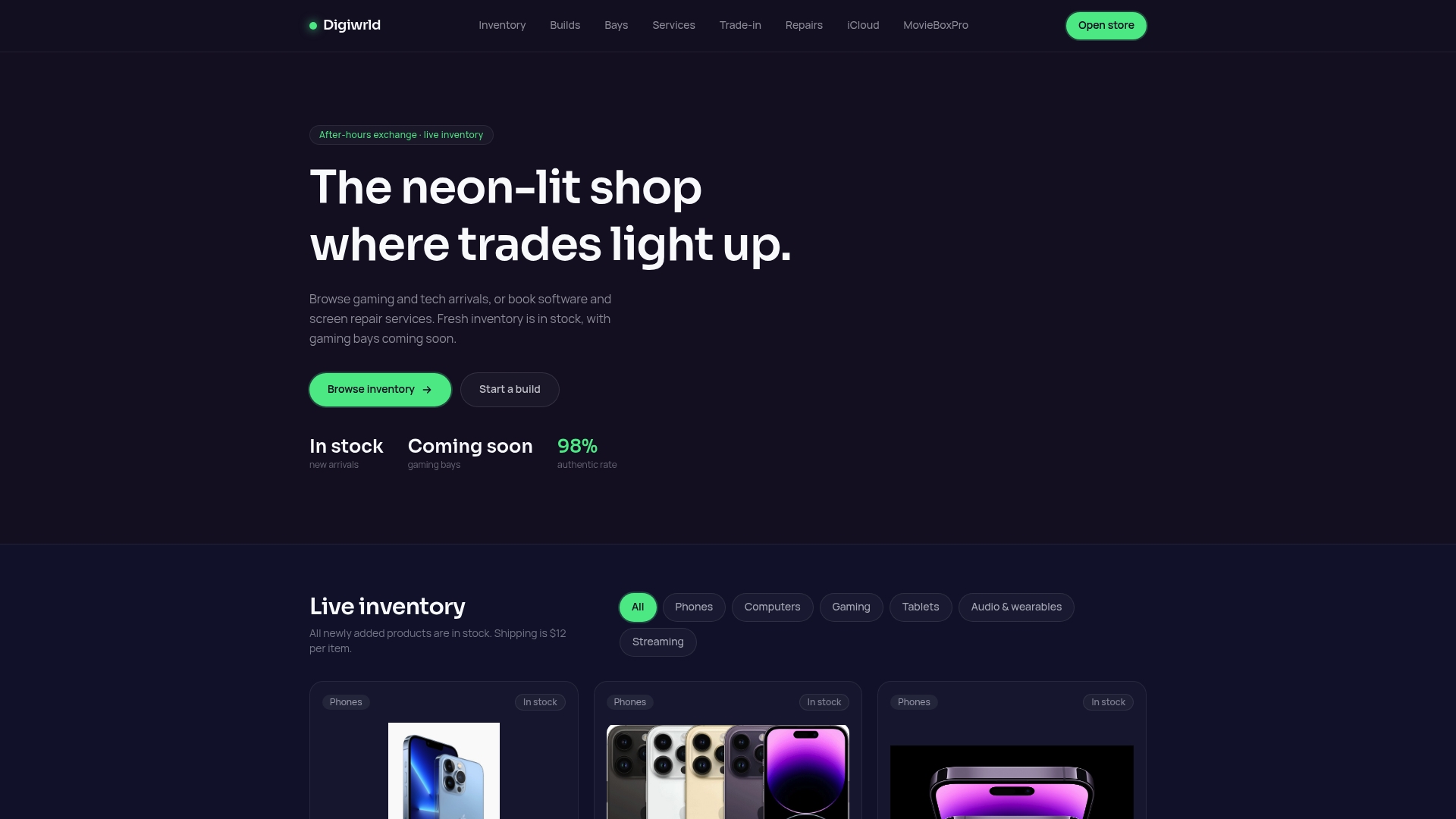
Beyond the initial purchase, Digiwrld’s combined retail and service model means you’re not stuck searching for help if a DualSense develops drift or a drive needs an upgrade down the line. The screen repair and hardware service team handles fixes with fast turnaround, and if you’re building out a full setup instead of just buying a console, the custom PC build service covers that too.
Ready to decide? Browse the PS5 in stock now, check the PS5 Pro listing for the enthusiast upgrade, or go straight to the Xbox Series X product page to see current pricing and confirm live availability before you buy.
Sources
- Xbox Series X vs PS5 2026: $799 vs $649 Tested
- PS5 vs Xbox Series X: $649 Each, 91M vs 34M 2026
- PS5 vs Xbox Series X — Tom’s Guide overview & verdict
- CNET coverage of ecosystem and library considerations (2026)
FAQ
Is PS5 Actually Better Than Xbox Series X?
Neither console is objectively better across every measure. PS5 wins on exclusive games, controller immersion, and VR support through PSVR2, while Xbox Series X wins on subscription value through Game Pass and backward compatibility depth.
Who Won, the Xbox Series X or the PS5?
If the question is raw specs, Xbox Series X has a higher-rated GPU at about 12 teraflops versus PS5’s 10.28. If the question is real-world buyer value in 2026, PS5 generally comes out ahead due to lower flagship pricing and a stronger exclusive library.
What Can PS5 Do That Xbox Can’t?
PS5 supports PSVR2, giving Sony a full native VR ecosystem that Xbox does not currently offer at all. PS5 also runs Sony’s exclusive single-player titles that never come to Xbox hardware, and its SSD delivers roughly double the raw throughput of Xbox Series X’s storage.
Is It Worth Getting a PS5 if I Have an Xbox Series X?
It depends entirely on why you’d want one. If Sony’s exclusive lineup or PSVR2 genuinely appeal to you and you don’t mind owning both, it can make sense, but most buyers get better value picking one platform and building their library and subscription around it rather than owning both consoles side by side.