Return Policy for Electronics Bought Online: What to Check
No federal law gives U.S. shoppers a right to return electronics just because they changed their mind. The store’s own written policy sets the terms, so the most useful thing to do is read it before paying. The checks that matter are the deadline, the condition the item must be in, any restocking fee, and who pays return shipping. The best protection is to buy brand new, authentic stock that is confirmed available. Digiwrld lists only brand new products and runs a live inventory system so every listing is in stock, which removes two of the most common causes of returns: wrong or substitute items and orders stuck waiting on stock.
TL;DR
- Stores set their own return windows. Most retailers use a time limit, from 14 days to a year, and the store is generally not required to accept returns of items that are not defective (Michigan Attorney General).
- Opened computers, cameras, projectors and software are where restrictions and restocking fees cluster. A 15% fee on opened laptops is one example.
- A restocking fee is generally not allowed for defective or wrong merchandise in states that regulate it, and it must be disclosed before purchase (Georgia Consumer Ed).
- If an item differs from its listing, the seller must fix it at no cost or refund the money. An item you never ordered can be kept.
- To avoid a fee: read the policy before checkout, keep all packaging, test the device promptly, and ask about exchange terms first.
Table of Contents
- What the law covers and what it leaves to the store
- Return windows: how long is long enough
- Opened items, open-box rules and restocking fees
- How to avoid a restocking fee
- When the order is defective, damaged or wrong
- When the order ships late or never ships
- A pre-purchase checklist for electronics
- Categories that need extra care
- Software and repair services follow a different logic
- Promo: buying and servicing in one place
- Perspective
- FAQ
- Sources
What the law covers and what it leaves to the store
Most shoppers assume a 30-day money-back right exists. It does not. The Better Business Bureau states that stores are not legally required to give refunds or exchanges unless the merchandise was defective or misrepresented, and that policies vary greatly and can be changed by stores at any time (BBB). The Michigan Attorney General says the same about no-return policies: a retailer that has one does not have to take items back unless they are defective, and the law generally treats online and in-store sales alike.
In practice, three layers apply to an online electronics order:
- The store’s published policy. This is the contract for change-of-mind returns. Whatever it says about windows, condition and fees governs.
- Defect and misdescription rules. If the item is broken on arrival or is not what the listing described, the seller is responsible regardless of a tight policy.
- Shipping-time rules. The FTC’s Mail or Telephone Order Merchandise Rule covers orders that ship late (see below).
Many states also require stores to disclose their return policy before the buyer pays. Because rules differ by state, the policy shown at checkout is the document to read and save.
Return windows: how long is long enough
The Michigan Attorney General notes that almost all retailers impose a limit, from 14 days to one year. For electronics the window is usually at the short end. Two details decide whether the window is useful:
- When the clock starts. Some stores count from the order date, others from delivery. A laptop ordered weeks before it is needed can pass its window before it is unboxed. Check the policy wording: “days from delivery” and “days from purchase” are not the same.
- What counts as returned. Some policies count the day the package is handed to the carrier, others the day it arrives back at the warehouse. A policy that is silent on this is worth a question before ordering.
A practical routine is to open and test a new device within the first few days: power it on, run the display and port checks, and install updates. Any defect found then falls well inside any window.
Opened items, open-box rules and restocking fees
Electronics are returned more strictly than clothing because an opened device cannot always be resold as new. The Michigan Attorney General lists computer equipment, music, movies, video games, software and collectibles among the categories where open-box restrictions are common. The same alert says certain retailers charge a 15% restocking fee, subtracted from the refund, on opened laptops, projectors, camcorders, digital cameras and in-car video systems. A 25% fee can apply to returned special-order products such as appliances unless the item is defective.
What a restocking fee costs
The fee is a percentage of the purchase price, taken from the refund. At the 15% level Michigan describes:
| Item price | Restocking fee at 15% | Refund after fee |
|---|---|---|
| $300 | $45 | $255 |
| $800 | $120 | $680 |
| $1,500 | $225 | $1,275 |
The fee is the same size whether the box was opened for five minutes or five days, so the best way to reduce it is to know the terms before opening anything.
When a restocking fee is not allowed
Georgia’s consumer education office explains that retailers may charge restocking fees, which are common on opened electronics. In states that have laws on the topic, though, it is illegal to charge them for defective merchandise, wrong merchandise delivered, late delivery, fees over 50% of the purchase price, or fees not disclosed before purchase (Georgia Consumer Ed). Since the rules depend on the state, the safest assumption is that a fee must be disclosed in advance and cannot be applied to a seller’s mistake.
How to avoid a restocking fee
A fee is avoidable most of the time. These steps keep it off the bill:
- Read the policy at the product page, not after the order. Look for the words “restocking,” “opened,” “final sale” and “open box.” A fee that is not disclosed before purchase is the kind many state laws prohibit.
- Confirm the exact model and specifications. Wrong RAM, storage or chip is the most common reason a laptop or phone goes back. Compare the listing against the requirement (for example, a game’s GPU needs or a work app’s memory needs) before ordering.
- Ask whether an exchange avoids the fee. Many policies charge fees on refunds but not on swaps for the same item.
- Keep every box, cable and manual. A return missing accessories is usually treated as a condition problem, and the fee grows.
- Photograph the package and the device when first opened. Pictures of the sealed box, the label and the condition on day one settle most disputes about damage in transit.
- Test within the first days. A defect found early is a defect claim, not a change-of-mind return, and the restocking fee generally does not apply to defective goods.
- Buy new rather than open-box or clearance. Open-box and clearance listings often carry tighter terms, sometimes final sale, so a brand new unit with a plain policy is the lower-risk purchase.
When the order is defective, damaged or wrong
These situations are not governed by the store’s generous or stingy window in the same way. FindLaw’s consumer guide says that if an item differs from the online listing, the seller is responsible for correcting the error at no extra charge or refunding the money, and some vendors reimburse return shipping when the error was the company’s fault (FindLaw). The same guide says an item you never ordered can be kept as a gift and the seller cannot demand payment.
A workable sequence for a bad delivery:
- Photograph the outer box, the shipping label and the damage before anything else.
- Contact the seller in writing the same day, with the order number and photos.
- State the remedy wanted: replacement or refund, and shipping paid by the seller.
- Keep all packaging until the matter is closed.
- If the seller does not respond and the purchase was on a credit card, the card issuer’s billing-dispute process under the Fair Credit Billing Act is the next route. Contact the card issuer directly for its deadline.
When the order ships late or never ships
The FTC’s Mail or Telephone Order Merchandise Rule applies to online orders. Sellers must have a reasonable basis to ship by the time stated, or within 30 days if no time is stated, and if they cannot, they must offer the buyer a choice to agree to the delay or cancel for a prompt refund (FTC rule notice). This is the main federal protection for online buyers, and it concerns shipping speed, not change-of-mind returns.
This is also why stock accuracy matters. Many delays start with an item that was listed but not actually on hand. Pre-orders and backorders are not the same thing, and the difference changes when a payment is taken and when a refund is due. The Digiwrld guide to backorder vs preorder explains what each means before checkout.

A pre-purchase checklist for electronics
Before paying, the reader should be able to answer each of these from the store’s own pages:
| Question | Why it matters |
|---|---|
| How many days, counted from what date? | Delivery-based windows give more usable time. |
| Is the item brand new, open-box or refurbished? | Condition sets the return terms and the fee risk. |
| Is there a restocking fee, and what percentage? | Fees of 15% or more turn a return into a real cost. |
| Who pays return shipping? | Free on seller error, usually buyer-paid otherwise. |
| Are any categories excluded? | Software, games and activated codes are often restricted. |
| Is the item actually in stock? | Prevents delay, substitution and cancellation. |
The first four are policy questions. The last two are about how the store operates, and they are the hardest to check from a policy page alone.
Categories that need extra care
Laptops and desktops. These are the products most often subject to opened-item fees. Storage, memory and operating system are the settings most often at issue. Buying a configuration that matches the intended use the first time is the cheapest return policy. For Apple desktops and laptops, product pages such as the MacBook Pro M2 and the Mac Mini M4 list the model being bought.
Graphics cards and PC parts. Compatibility is the failure point: power supply wattage, case clearance, and motherboard slot. A card such as the RTX 5070 PNY OC 12GB should be checked against the case and power supply before the order, not after.
Software and digital codes. Michigan lists software and video games among the open-box restricted categories. Once a code is activated or a disc opened, a refund is often unavailable except for a defect.
Special orders and custom builds. The Michigan alert notes a 25% fee can apply to special-order items, unless defective. Custom work is made to a specification, so the specification is what to confirm in writing.
Software and repair services follow a different logic
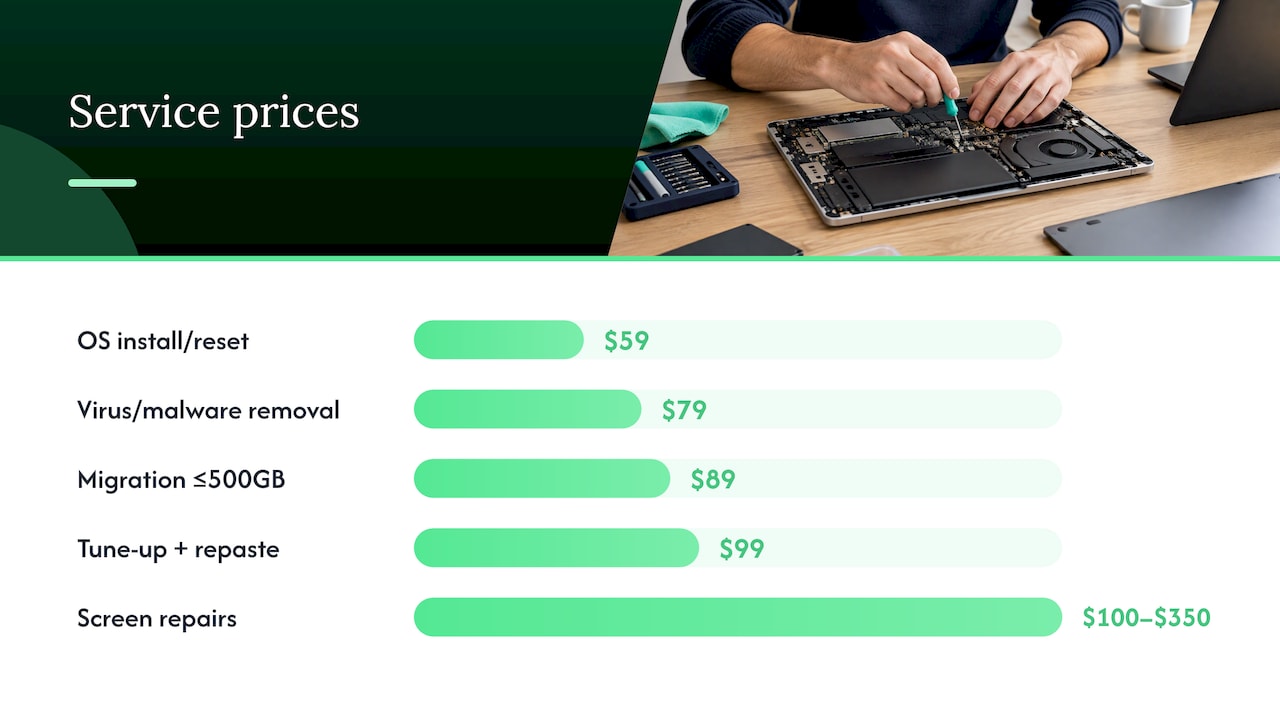
A service is not a returnable box. The terms that matter are the price, what is included, and how the device gets to the technician. Digiwrld publishes these figures: screen repairs run $100 to $350, an OS install or reset is $59, virus and malware removal is $79, data migration up to 500GB is $89, and a full tune-up with thermal repaste is $99. Mail-in service adds a $10 fee, and shipping on store orders is $12 per item. Custom PC builds start from $800.
Before any repair, the habits that protect the owner are the same as with a purchase: back up the data, note the serial number and photograph the device’s condition, and keep the written quote.
Promo: buying and servicing in one place
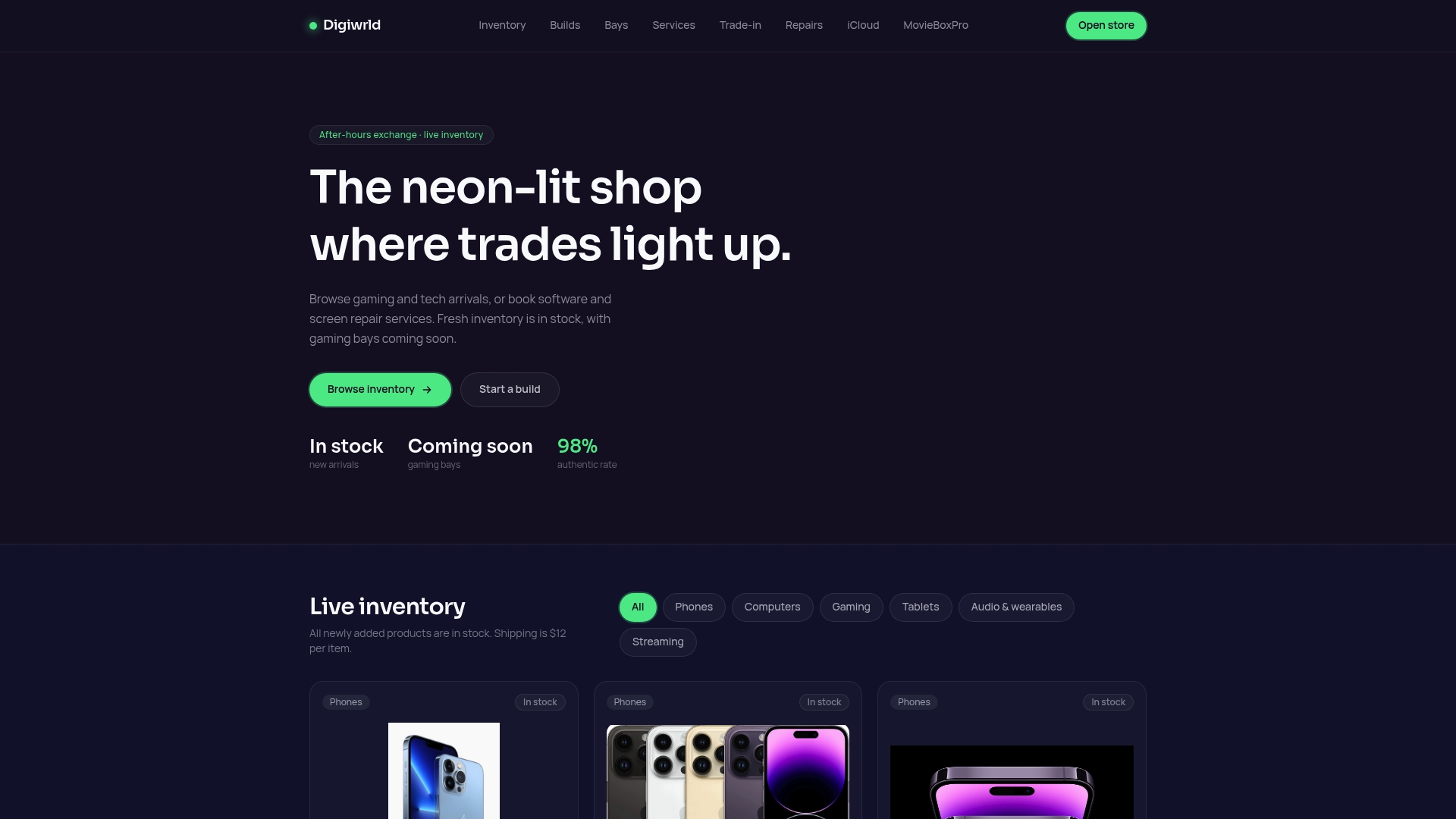
Digiwrld sells brand new, authentic phones, computers, gaming gear, tablets, audio and wearables, and its live inventory system is built so every listing is in stock. The same site handles screen repairs and mail-in service, software installs and custom builds, so a purchase and its follow-up support sit under one roof. Browse the full range at digiwrld.com.
Perspective
Most return trouble starts before checkout, not after delivery. A listing that is not really in stock leads to substitutions, delays and cancellations, and an open or refurbished unit sold as new leads to disputes over condition.
That is why we built Digiwrld around two commitments: only brand new, authentic products, and a live inventory system so every listing is in stock. A customer who knows exactly what is being shipped, and that it exists on the shelf, is far less likely to need a return in the first place.
We also pair hardware with services. If a device needs a screen repair, a clean OS install or a custom PC build, those are available in the same place, with the prices published. We believe a store should make the terms easy to read and the stock easy to trust.
Hayden
FAQ
Can you return electronics you bought online?
Only if the store’s policy allows it, or if the item is defective or not as described. The law generally treats online and in-store sales alike, and almost all retailers set a time limit, from 14 days to a year (Michigan Attorney General). Read the policy before ordering.
Can you return a laptop after buying it?
Usually yes within the window, but opened laptops are a category where open-box restrictions and restocking fees are common. Michigan’s alert gives 15% as an example of a fee on opened laptops. Confirm the window, the condition required and any fee before checkout.
Which electronics are often not eligible for return?
Computer equipment, music, movies, video games, software and collectibles are the categories Michigan names as commonly restricted once opened. Clearance and open-box items often carry stricter terms, so check the product page for “final sale” wording.
If a seller sends the wrong item, do you have to return it?
If the item differs from the listing, the seller must correct the error at no extra charge or refund the money, and some sellers cover return shipping (FindLaw). An item you never ordered at all can be kept, and the seller cannot demand payment.
How do you avoid a restocking fee?
Read the fee terms before buying, confirm the exact specifications, test the device right after delivery, keep all packaging and accessories, and ask whether an exchange avoids the fee. Fees for defective or wrong items are generally barred in states with laws on the subject (Georgia Consumer Ed).
Sources
- Avoiding Unhappy Returns, Michigan Attorney General
- Holiday returns and exchanges, Better Business Bureau
- Can a company charge a restocking fee on returned merchandise, Georgia Consumer Ed
- Problems With Online Shopping, FindLaw
- Mail or Telephone Order Merchandise Rule, FTC rule notice